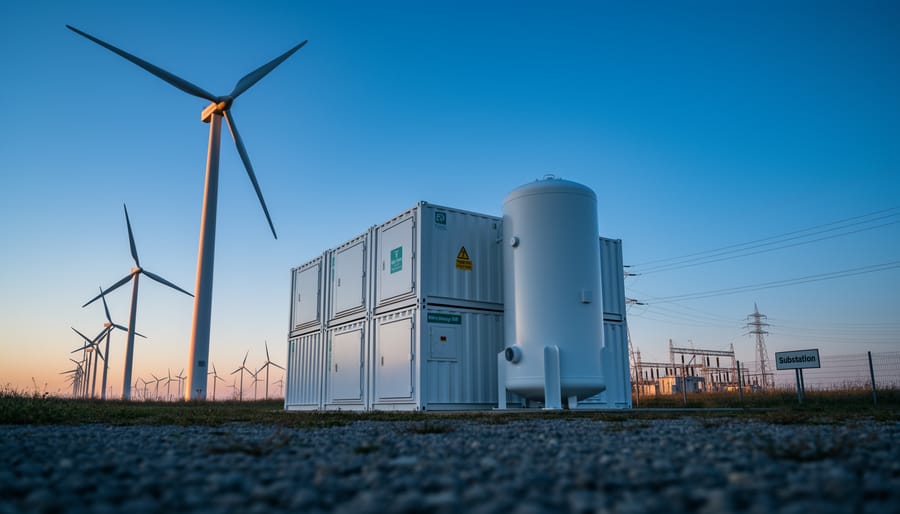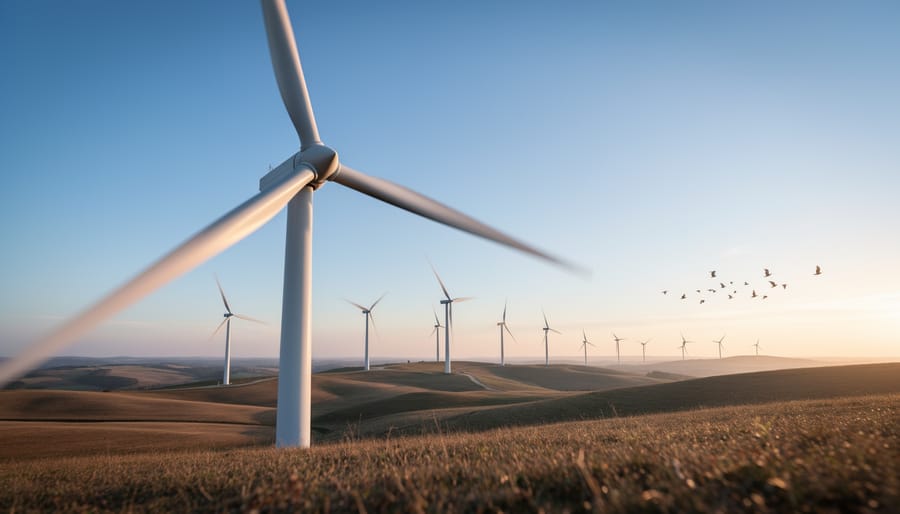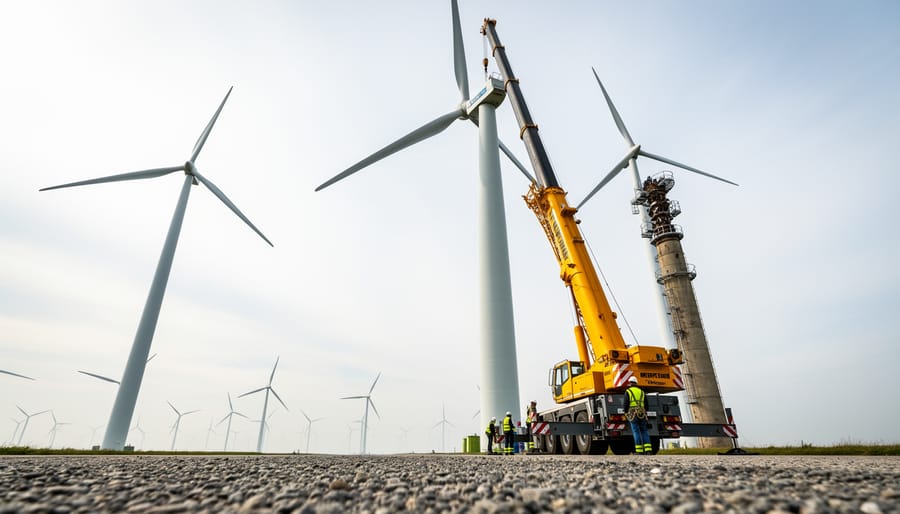
Wind energy is good for the environment overall, but like all infrastructure, it brings localized environmental trade-offs that deserve honest examination. Wind turbines produce zero emissions during operation and displace fossil fuel generation that would otherwise pump carbon dioxide and pollutants into our air. Over their 20 to 25-year lifespan, they offset the carbon footprint of their manufacturing many times over. Yet concerns about bird and bat mortality, land use, noise, and visual impacts in urban settings are legitimate and worth understanding.
For property owners and developers considering urban wind installations, the picture is more nuanced than simple green versus gray. Small-scale turbines mounted on buildings or in city spaces face stricter environmental scrutiny than their rural counterparts. Urban wildlife, particularly migratory birds, navigate corridors where turbines might pose collision risks. Noise and shadow flicker can affect neighbors in ways that matter both legally and socially. The good news is that 2026 standards and careful site assessment address most of these concerns before a turbine ever spins.
The real question isn’t whether wind energy harms the environment in absolute terms. The research is clear: wind power prevents far more environmental damage than it causes when measured against continued reliance on coal, gas, or oil. The better question is how to install urban wind responsibly so the community benefits outweigh the localized impacts.
This article walks through what urban wind energy actually entails environmentally, who can install it, the application process that balances renewable goals with ecological protection, your rights and obligations as an installer, and where to find expert guidance. We’ll ground every claim in current evidence and real-world case studies, so you can make informed decisions about urban wind that serve both your energy goals and environmental responsibility.
What Urban Wind Energy Is and How It Differs Environmentally
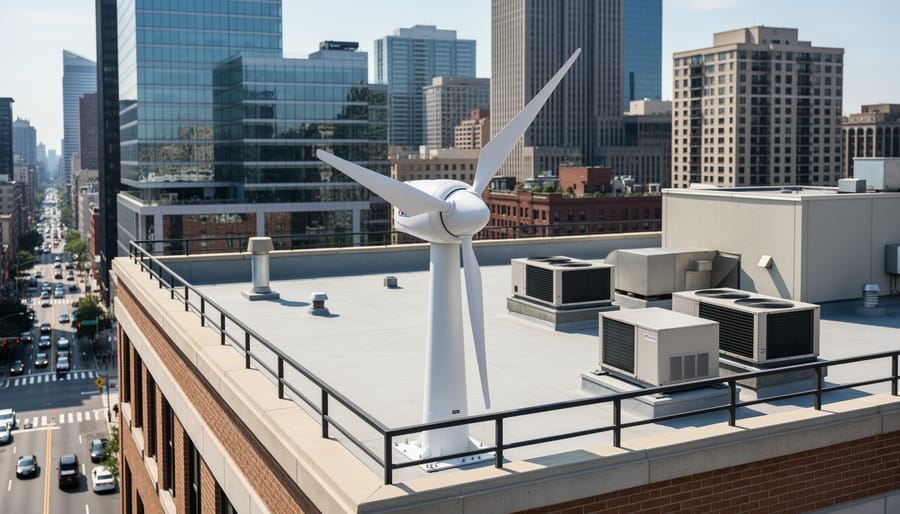
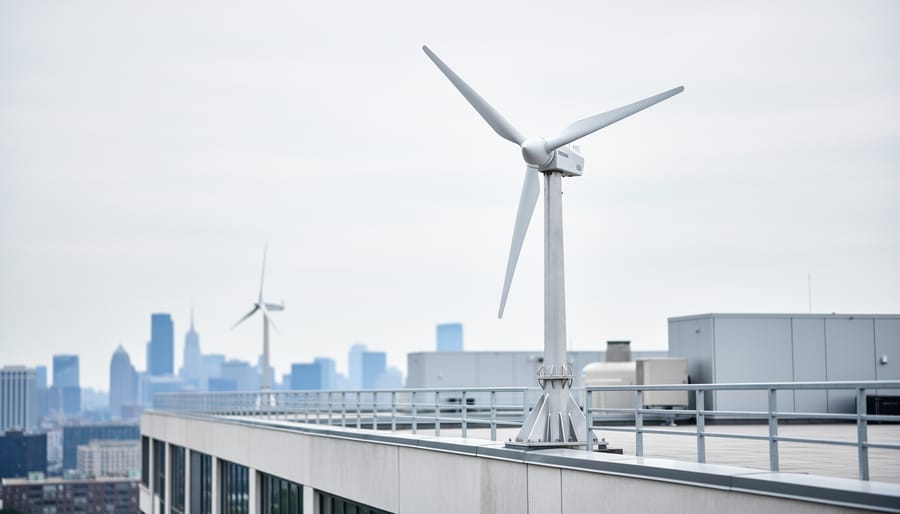
Urban wind energy refers to small-scale wind turbines installed in cities and towns, typically mounted on buildings, rooftops, or standalone structures within urban environments. Unlike massive commercial wind farms that occupy rural land and harness steady winds at heights of 80 meters or more, urban systems are compact, often between one and ten kilowatts in capacity, and designed to operate at lower elevations where buildings, trees, and infrastructure create complex wind patterns. You might see horizontal-axis turbines spinning on rooftops, vertical-axis models integrated into building facades, or hybrid systems that capture wind from multiple directions.
From an environmental standpoint, urban wind offers several advantages over traditional energy sources. These systems generate electricity right where it’s consumed, eliminating transmission losses that waste up to 8% of grid power. They occupy minimal ground space, sitting on existing structures rather than requiring new land clearance. A typical rooftop turbine displaces roughly 1.5 to 3 tonnes of carbon dioxide annually, modest compared to offshore giants, but meaningful for urban carbon budgets when deployed at scale across neighborhoods.
However, the physics of cities present distinct environmental challenges. Turbulent airflow reduces efficiency, urban turbines typically capture 10-30% of theoretical wind energy compared to 40-50% for rural farms. This lower yield means longer payback periods for embodied carbon from manufacturing and transport. Proximity to residents amplifies concerns about noise, with even low-frequency hum carrying through building structures. Shadow flicker from spinning blades can affect nearby windows, and visual impact becomes contentious in historic districts or skyline-sensitive zones.
The 2026 regulatory framework reflects these trade-offs. Most jurisdictions now require environmental impact assessments that measure actual wind resources, model noise propagation, and evaluate effects on local bird populations before permits are issued. Building codes specify structural reinforcement standards to prevent vibration transmission, while zoning laws enforce setback distances, often 5 to 15 meters from property lines, to protect neighbors. Environmental agencies have introduced lifecycle assessment requirements, pushing manufacturers to disclose material sourcing and end-of-life recycling plans. This layered oversight aims to ensure urban wind delivers genuine environmental benefits rather than simply shifting problems from rural areas into densely populated spaces.
Environmental Eligibility and Site Requirements
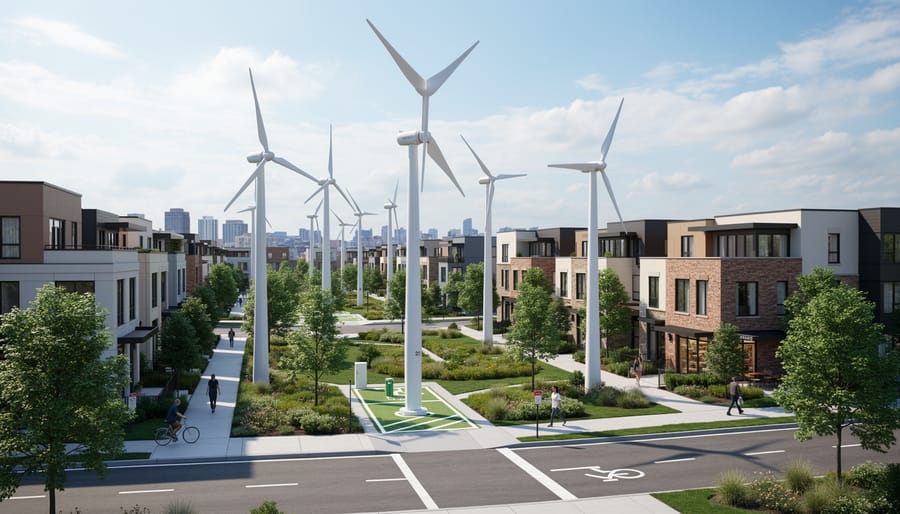
Who Qualifies: Residential, Commercial, and Municipal Applicants
Urban wind installations aren’t open to everyone, eligibility depends on property type, ownership status, and structural capacity. Understanding these requirements upfront can save months of wasted effort.
Residential property owners can typically apply for small-scale turbines if they own their building outright and meet local zoning criteria. Renters cannot independently pursue installations without landlord consent and formal property rights agreements. If you live in a homeowners association (HOA) community, check your covenant documents first, many HOAs have architectural restrictions that explicitly prohibit vertical structures like wind turbines, even if local zoning permits them. Some jurisdictions now require HOAs to allow renewable installations, but enforcement varies.
Commercial property owners face stricter structural requirements. Buildings must undergo engineering assessments to confirm they can bear turbine weight, wind loads, and vibration stresses. Warehouses, industrial facilities, and office buildings with reinforced roofs are typically viable candidates. Retail spaces in historic districts or downtown cores often face aesthetic restrictions that effectively disqualify them.
Municipal and public entitiesschools, government buildings, transit facilities, generally have streamlined approval pathways but must comply with public procurement rules and environmental review standards. Some cities prioritize public buildings for pilot programs, offering technical assistance that private applicants don’t receive.
Regardless of category, all applicants must demonstrate site ownership or long-term lease agreements (typically 15-20 years minimum), provide proof of adequate insurance, and show that existing utility connections can handle distributed generation. Shared-ownership properties like condominiums require unanimous or supermajority board approval in most jurisdictions.
How to Apply for Urban Wind Installation Permits
Applying for urban wind installation permits requires navigating a multi-stage approval process designed to protect both environmental quality and community interests. The exact procedure varies by jurisdiction, but most urban areas in 2026 follow a similar framework that begins months before any turbine can legally operate.
Start with a pre-application consultation at your local planning or environmental department. This informal meeting costs nothing and saves time by identifying deal-breakers early, whether your site sits in a protected zone, whether your proposed turbine exceeds height restrictions, or whether neighbors have rights that could block installation. Bring preliminary site plans, photos, and your turbine specifications. Planners will outline which permits you need and flag potential environmental objections.
Next, commission the required environmental assessments. Most jurisdictions mandate a noise impact study by a qualified acoustic consultant, typically costing $1,500, $3,500. The consultant measures ambient noise levels, models projected turbine noise at property boundaries, and confirms compliance with local limits (usually 35-45 decibels at night). You’ll also need a visual impact assessment if your turbine will be visible from public spaces or heritage areas. Some cities require a shadow flicker analysis showing how moving blade shadows affect neighboring windows; software can model this for around $800, $1,200. If your site lies near parks, waterways, or known bird migration corridors, expect to hire an ecological consultant for a wildlife risk assessment, budget $2,000, $5,000.
A licensed structural engineer must certify that your building can safely support the turbine’s weight, vibration, and wind loads. This structural report costs $1,000, $2,500 and often takes two weeks. Gather proof of property ownership, detailed turbine specifications from the manufacturer (including noise ratings and blade dimensions), and site plans showing setback distances from boundaries.
Submit your complete application package to the planning authority. Application fees range from $500 in smaller cities to $3,000 in major metropolitan areas. Processing times vary, expect 8-12 weeks for straightforward residential installations, but 16-24 weeks if public consultation is required. Most jurisdictions mandate a 21-day public notice period during which neighbors can raise objections. If concerns arise, you may need to attend a planning committee hearing and present your environmental evidence.
Approval comes with conditions: annual noise monitoring, maintenance schedules, and sometimes requirements to shut down during bird migration seasons. If your application is refused, you can appeal, but this adds 2-4 months and legal costs. Once approved, permits are typically valid for 12 months, if you don’t start construction within that window, you’ll need to reapply. Keep all environmental monitoring records; they’re mandatory for permit renewals every 5-10 years.
Environmental Rights and Obligations for Urban Wind Operators
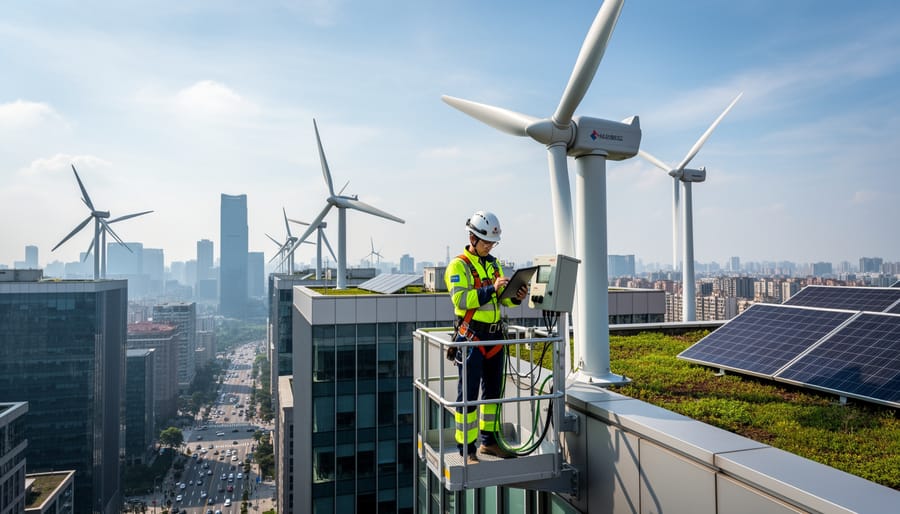
Once your urban wind turbine is operational, you step into a dual role: obligated to meet environmental standards, but also protected by rights that shield you from arbitrary interference. Most jurisdictions treat turbine operators as licensed energy producers with enforceable duties and corresponding legal safeguards.
Your core obligation is ongoing noise monitoring. Depending on local rules, you may need to commission annual or biannual sound-level surveys to confirm you stay within the decibel limits that earned you the permit in the first place. Some cities require real-time monitoring equipment that logs noise data and makes it available to authorities on request. If you exceed thresholds, you must take corrective action, installing sound-dampening shrouds, adjusting blade pitch, or reducing operating hours, within a specified window, often 30 to 90 days.
Maintenance schedules are not optional. Regulations typically mandate quarterly inspections of mechanical components, annual structural assessments, and immediate repairs of any defects that could harm the environment, such as oil leaks from gearboxes or loose blades that pose strike risks to birds. Keep detailed logs; inspectors can audit them, and gaps in maintenance records can trigger fines or permit suspension.
Decommissioning and recycling obligations kick in at end-of-life. Most permits require you to dismantle the turbine within six months of permanent shutdown and to recycle or responsibly dispose of materials, blades, tower steel, electronics, according to local waste regulations. Some jurisdictions ask for a financial bond upfront to cover decommissioning costs if you default.
Liability for wildlife incidents varies. In areas with protected bird or bat populations, you may be required to report strikes, participate in post-installation mortality studies, and implement mitigation measures like seasonal shutdowns during migration peaks or ultrasonic bat deterrents. Violating protected-species laws can result in substantial penalties.
The table below summarizes the balance between what you must do and what you are entitled to:
| Operator Obligations | Corresponding Rights and Protections |
|---|---|
| Conduct regular noise monitoring and stay within permitted decibel limits | Protection from nuisance complaints if you remain compliant; complaints must be verified by independent testing before enforcement action |
| Maintain turbine to prevent environmental harm; keep inspection logs | Right to continue operation as long as maintenance standards are met; cannot be shut down arbitrarily |
| Decommission and recycle turbine at end-of-life; post bond if required | Access to licensed recyclers and guidance on material recovery; bond is returned if decommissioning is completed on time |
| Report wildlife incidents; implement mitigation if required by permit | Right to appeal mitigation orders that are disproportionate; access to regional wildlife offset programs in some areas |
| Comply with local environmental standards and zoning rules | Eligibility for feed-in tariffs or net metering; right to appeal permit denials or modifications through formal channels |
On the rights side, compliance unlocks financial benefits. If you meet all environmental and technical standards, you can access feed-in tariffs or net metering arrangements that credit you for surplus electricity fed back to the grid. These schemes are legally protected once you are approved; utilities cannot deny connection or payment if you hold a valid permit and pass grid-safety tests.
Protection from nuisance complaints is significant. Neighbors cannot force you to shut down simply by lodging objections if independent verification shows you are within permitted noise, shadow flicker, and setback limits. Authorities must follow due process, which typically means commissioning their own environmental assessments before taking enforcement action.
You also retain the right to appeal. If a permit is denied, conditions are added mid-operation, or a complaint triggers enforcement, most jurisdictions offer formal appeal routes: administrative hearings, environmental tribunals, or judicial review. Engage a solicitor experienced in planning and environmental law if you reach this stage.
Addressing Key Environmental Concerns in Urban Settings

Urban wind energy installations face legitimate environmental scrutiny, but the evidence reveals a more nuanced picture than blanket criticism suggests. The most persistent concerns, noise, visual intrusion, wildlife harm, carbon intensity, and material waste, each have measurable impacts that modern technology and careful siting can substantially reduce.
Noise pollution tops the list of urban complaints, yet properly installed small-scale turbines typically generate 35-45 decibels at standard setback distances, comparable to a quiet library or residential air conditioning unit. Cities like Copenhagen and Rotterdam have mitigated noise concerns through strategic placement on taller buildings where wind flow is smoother, and by requiring manufacturers to certify maximum noise outputs before approval. Turbine designs with helical blades and enclosed generators further reduce sound signatures. When installations comply with local noise ordinances, usually capped at 45-50 decibels at property lines, documented complaints drop to negligible levels after the first year.
Visual and aesthetic impact remains subjective but manageable. Critics argue turbines disrupt skylines and reduce property values, yet studies from Portland and Melbourne found no measurable property value decline when turbines integrated into existing rooflines or industrial zones. Transparent community consultation before installation, design choices that match building architecture, and zoning that restricts turbines to commercial or mixed-use districts have proven effective. Some cities now require visual impact assessments as part of permitting, ensuring turbines don’t dominate historic districts or residential sightlines.
The wildlife impacts of urban turbines differ markedly from large wind farms. Urban installations spin at lower speeds due to turbulent wind conditions and smaller blade diameters, reducing collision risks for birds and bats. Research from Berlin’s urban wind projects documented fewer than two avian incidents per turbine annually, compared to higher rates at rural sites with migratory pathways. Ultrasonic deterrents and seasonal shutdowns during bat migration periods, now standard in many jurisdictions, further minimize harm. Most urban turbines sit atop buildings in already-developed environments with limited wildlife habitat, concentrating risk among urban-adapted species rather than vulnerable populations.
Embodied carbon and lifecycle emissions present a fair critique but one that context clarifies. Manufacturing, transporting, and installing a small urban turbine does require energy and materials, but lifecycle analyses show carbon payback periods of 6-18 months depending on turbine size and local wind resources. The environmental footprint over a 20-year operational lifespan remains substantially lower than grid electricity from mixed sources in most urban markets. Amsterdam’s municipal wind program offsets approximately 40 tons of CO2 annually per rooftop unit, far exceeding the initial embodied emissions.
Material waste and end-of-life disposal have improved with newer recycling mandates. Turbine blades historically posed landfill challenges, but composite recycling technologies and decommissioning bonds now ensure responsible disposal. Several European cities require applicants to demonstrate recycling plans before permit approval, and manufacturers increasingly design for disassembly.
Where to Get Help and Official Resources
Securing the right guidance before, during, and after your urban wind installation makes the difference between a smooth, compliant project and a costly regulatory tangle. Fortunately, a well-developed network of official agencies, professional bodies, and community resources exists to help navigate environmental requirements and permitting processes.
Start with your local planning or environmental department. These municipal or county offices handle zoning approvals, environmental impact assessments, and building permits for urban wind projects. Staff members can clarify site-specific regulations, explain noise and setback requirements, and walk you through application timelines. Many now offer pre-application consultations where you can discuss your project informally before submitting formal paperwork.
At the national level, government renewable energy agencies provide comprehensive technical guidance, policy updates, and links to financial incentives. In the United States, the Department of Energy’s Wind Energy Technologies Office offers fact sheets, feasibility tools, and installer directories. The UK’s Renewable Energy Association and Canada’s CanWEA provide similar resources tailored to their regulatory frameworks. These agencies often publish case studies from successful urban installations that can inform your approach.
- Local planning and environmental departments for permits and zoning guidance
- National renewable energy agencies (e.g., DOE Wind Energy Technologies Office, Renewable Energy Association UK)
- Non-profit advisories like the American Wind Energy Association (AWEA) and European Small Wind Association
- Certified installers with urban wind experience and environmental compliance records
- Online permit portals for application tracking and document submission
- Community forums and local renewable energy cooperatives for peer support
Beyond official channels, non-profit organizations such as the American Wind Energy Association and the European Small Wind Association offer technical workshops, installer vetting services, and advocacy support. They maintain databases of accredited professionals who understand both the engineering and environmental sides of urban wind.
When selecting an installer or environmental consultant, verify their credentials: look for certifications from recognized trade bodies, request references from previous urban projects, and confirm they carry liability insurance covering environmental damage. Accredited professionals will conduct thorough noise assessments, bird migration studies, and lifecycle carbon analyses as standard practice.
Many jurisdictions now operate online permit portals where you can submit applications, track approval status, and access environmental checklists. These platforms streamline coordination between planning, environmental, and building departments. Finally, local renewable energy cooperatives and online community forums connect you with neighbors who’ve completed similar projects, offering practical advice on dealing with specific local quirks and identifying environmental grant opportunities tied to performance standards.
Frequently Asked Questions
Is urban wind energy worse for the environment than solar?
Neither is inherently worse. The solar vs wind debate depends on your specific location, available space, and energy needs. Urban wind turbines typically produce more energy in smaller footprints during windy periods and work at night, while solar panels require no moving parts and cause zero noise but need larger roof areas and only generate during daylight hours.
How much noise do urban turbines actually make?
Most modern small-scale urban turbines produce between 35 and 50 decibels at a distance of 10 meters, comparable to a quiet library or moderate rainfall. Properly sited installations that meet setback requirements rarely generate noise complaints, and many jurisdictions mandate maximum noise levels of 45 decibels at the nearest property boundary.
Can I install a turbine if I live near a park or nature reserve?
You can apply, but expect stricter scrutiny and additional environmental assessments. Planning authorities typically require detailed bird and bat surveys if your property sits within 500 meters of protected green spaces, and some jurisdictions impose seasonal installation restrictions during migration periods or breeding seasons.
What happens if my turbine harms wildlife?
As the turbine owner, you’re legally responsible for monitoring and reporting any wildlife incidents. Most urban installations pose minimal risk when properly sited, but if a protected species is harmed, you may face fines, mandatory operational changes, or even removal orders depending on local wildlife protection laws and whether you followed all permit conditions.
Beyond these common concerns, many prospective urban wind operators ask about available financial support. Environmental grants and incentives tied to renewable energy installations vary widely by region, but most cities and national programs in 2026 offer some combination of installation rebates, property tax exemptions, or feed-in tariff payments for clean energy generation. Check with your local environmental department or renewable energy agency to identify programs that reward installations meeting specific environmental standards, such as certified low-noise turbines or systems using recyclable materials.
Understanding whether wind energy serves as an environmental ally in urban contexts comes down to proper planning and regulatory compliance. When sited thoughtfully and operated responsibly, small-scale turbines contribute to cleaner city energy without causing significant environmental harm.
Urban wind energy isn’t inherently bad for the environment, quite the opposite. When installed thoughtfully and managed responsibly, small-scale turbines contribute to cleaner city air, reduced carbon emissions, and localized renewable generation that takes pressure off fossil fuel grids. The key is doing it right from the start.
Success hinges on understanding your eligibility, conducting thorough site assessments, and securing the proper permits before installation. The environmental concerns that worry many residents, noise, wildlife impacts, visual disruption, are all manageable through existing regulations and proven mitigation strategies. Cities worldwide have shown that when operators follow environmental obligations, monitor performance consistently, and engage with their communities, urban wind can coexist harmoniously with daily life.
Don’t navigate this alone. Official resources exist precisely to help you make informed decisions: local planning departments can clarify zoning requirements, renewable energy agencies offer technical guidance, and certified consultants ensure your project meets both legal and environmental standards. Tap into these networks early and often.
The future of sustainable cities depends on diversified energy solutions, and urban wind has earned its place in that mix. It won’t replace larger renewable infrastructure, but it demonstrates that every building, every neighborhood, and every forward-thinking property owner can contribute to a cleaner environment. With the right approach, urban wind energy becomes part of the solution, not the problem.