Kinetic energy in a wind turbine is the energy of moving air, the motion of wind itself, which the turbine’s blades capture and convert into rotation and then into electricity. The faster the wind blows and the more air sweeps across the blades, the more energy is available. Double the wind speed and the power on offer jumps eightfold, which is why turbines are built tall and placed where the wind is strong and steady.
This matters because every clean kilowatt-hour from wind starts with this single transfer. Understanding it explains why blades are shaped like aircraft wings, why gearboxes and generators sit where they do, and why some parts wear out faster than others. That last point is where the story gets interesting. How a turbine handles energy conversion shapes how long each component lasts, when it can be repaired, and whether it can be reused or recycled at the end of its life.
A turbine never captures all of the wind’s energy, and physics says it can’t. But modern designs get remarkably close to the theoretical ceiling.
In the sections ahead, you’ll get a plain-language walkthrough of how that conversion works, a look at the key components involved, and a view of how smart design supports repair, reuse, and recycling across a turbine’s working life.
What Kinetic Energy Means in a Wind Turbine
Why Wind Speed Matters So Much
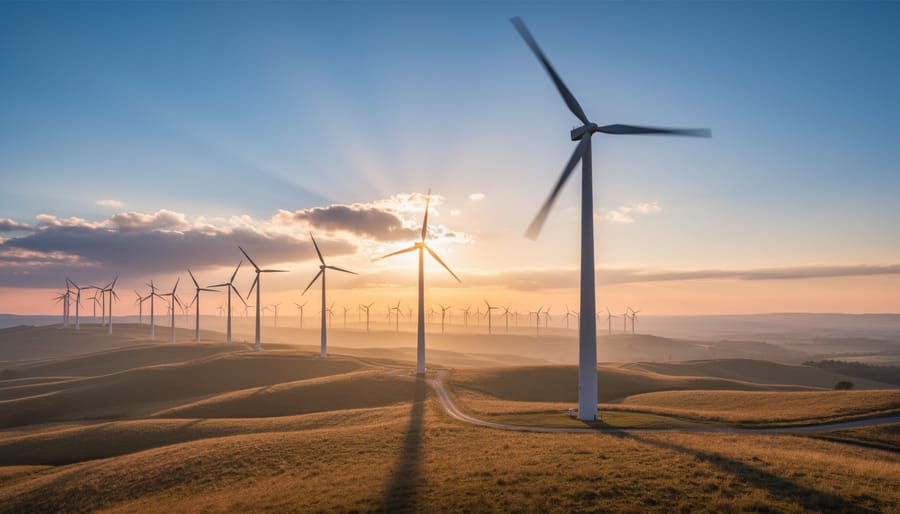
Wind speed matters more than almost anything else in a turbine’s life. The energy in moving air grows with the cube of its speed, so doubling the wind speed multiplies the available energy about eight times. A gentle breeze and a steady gale are not simply “a bit different.” They are worlds apart in what a turbine can capture.
That is why developers pick sites with strong, consistent wind and build tall. Wind blows faster and smoother higher up, away from trees, hills, and buildings, so tower height boosts wind access and output. A modest gain in speed at the top of the tower pays off many times over in electricity.
A few terms will help as you read on:
- Kinetic energy
- The energy an object has because it is moving, including the air that makes up wind.
- Wind speed
- How fast the air is travelling, which sets how much energy is available to capture.
- Rotor
- The blades and hub together, which catch the wind and start the spinning.
- Generator
- The machine that turns the rotor’s spinning motion into electricity.
- Capacity factor
- The share of its maximum possible output that a turbine actually delivers over time.
- Cut-in speed
- The minimum wind speed at which a turbine begins producing power.
How a Wind Turbine Turns Moving Air Into Electricity
From Blade to Grid: The Conversion Chain
Think of the conversion chain as a relay race, where each component hands the energy to the next in a different form. It starts the moment moving air meets the blades. Their airfoil shape creates lift, much like an airplane wing, and that force pushes the rotor around. From there the energy travels through a sequence of stages:
- Blades capture the wind’s kinetic energy and turn it into rotational motion through aerodynamic lift.
- The hub and main shaft carry that slow, powerful rotation into the nacelle.
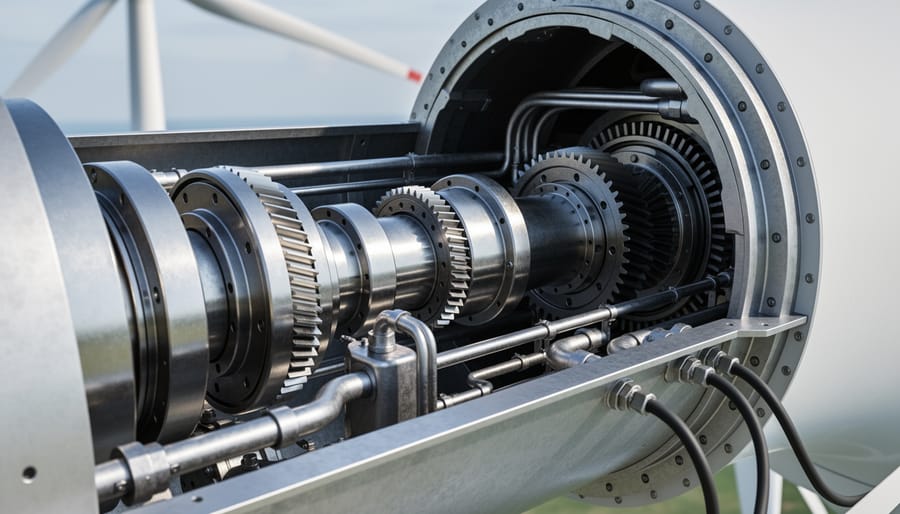
- The gearbox (or a direct-drive system) raises the shaft speed to what the generator needs.
- The generator converts rotational energy into electrical energy through electromagnetic induction.
- Power electronics condition the output, which typically uses 3-phase wiring to move current efficiently.
- The transformer steps the voltage up so electricity can travel along the grid.
Each handoff loses a little energy as heat and friction, so every stage is engineered to be as efficient as possible. It also explains why some parts age faster than others. Components that spin the hardest, like bearings and gears, take the most mechanical punishment, which matters later when we look at repair and reuse.
How Turbines Adapt to Changing Wind
Wind is never steady, so a turbine needs ways to adjust. Three controls do most of the work.
Pitch control rotates each blade around its own axis. In light wind, the blades are angled to catch as much air as possible. As wind strengthens, they twist away from it, spilling excess energy so the rotor doesn’t spin faster than it should. This keeps power output steady and avoids overloading the drivetrain.
Yaw control turns the entire nacelle to face the wind. Sensors on the back of the machine read wind direction, and motors rotate the rotor until it points squarely into the airflow. A rotor that stays misaligned wastes energy and puts uneven stress on blades and bearings.
Cut-in and cut-out speeds set the working range. Most turbines begin generating at around 3 to 4 meters per second (the cut-in speed), since slower air carries too little energy to be worth capturing. When wind reaches roughly 25 meters per second (the cut-out speed), the blades pitch out of the wind and the rotor brakes to a halt.
These adjustments do more than boost output. By keeping loads within safe limits, they reduce fatigue in blades, gearboxes, and bearings. Gentler wear means longer component life, which is exactly what makes repair, refurbishment, and reuse realistic options later on.
Key Components That Capture and Carry the Energy
Every part of a turbine plays a role in catching wind energy and passing it along, and each one is built from materials chosen for the job.
The blades are the first point of contact. Most are made from glass-fibre or carbon-fibre composites bonded with epoxy resin, which keeps them light yet stiff enough to hold their shape in strong gusts. They are also the hardest part to recycle today, which is why so much innovation is focused here.
The hub anchors the blades and transfers their rotation to the main shaft. Both are typically cast or forged steel, built to handle enormous twisting forces. Steel is highly recyclable, so these heavy components hold real recoverable value.
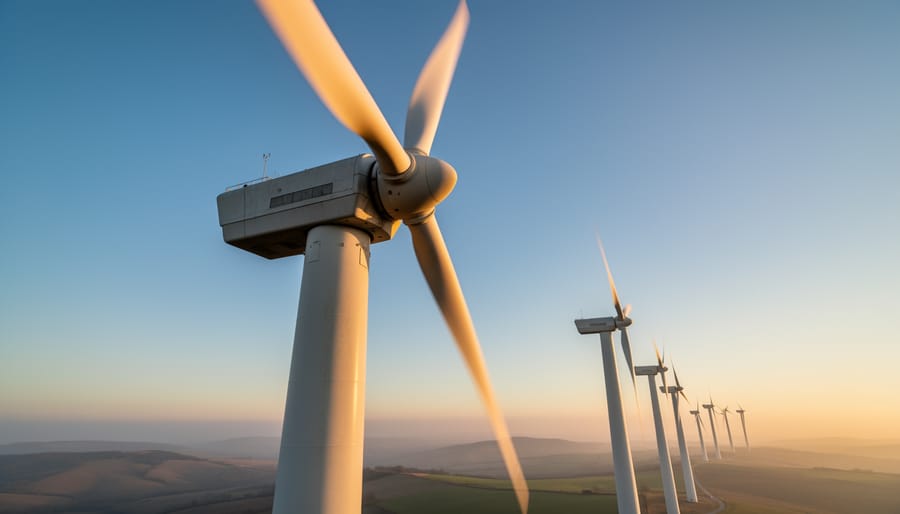
Inside the nacelle, the housing at the top of the tower, you’ll find the gearbox, the generator, and the control systems. The gearbox steps up the slow rotor speed to the faster speed a generator needs. It’s a precision assembly of hardened steel gears, and it often carries the most wear, since it absorbs every fluctuation in the wind. Some modern designs skip it entirely with direct-drive systems.
The generator turns mechanical motion into electricity using copper windings and, in many models, permanent magnets containing rare earth elements. Copper is easy to reclaim, while the magnets are valuable enough that recovering them is an active area of research.
Finally, the tower, usually rolled steel or concrete, lifts everything into faster, steadier wind. It sees little mechanical wear and is among the easiest components to recycle at the end of its life.
Kinetic Energy Meets the Circular Economy
Real-Life Case Study: Giving Turbine Parts a Second Life
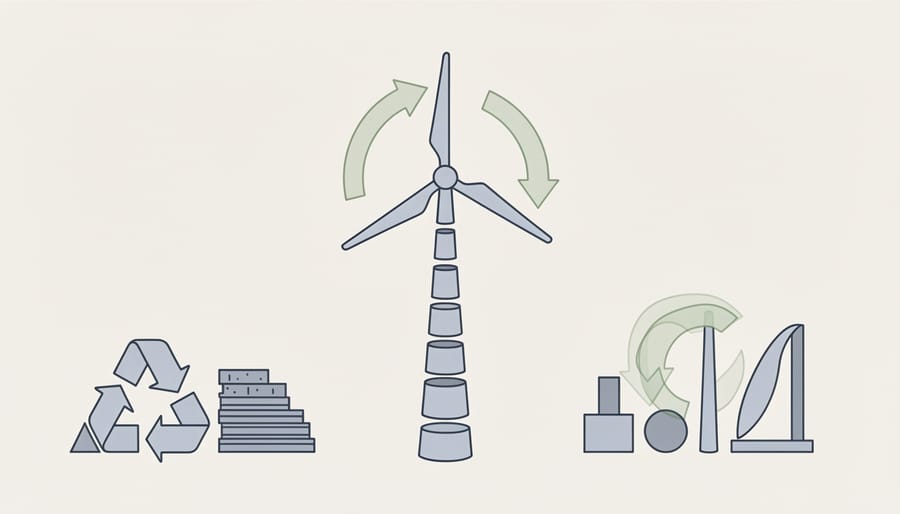
Consider what happens when a wind farm reaches the end of its original design life. Many operators now treat that moment as a decision point, not an ending. Repowering, which means replacing older turbines or key components with newer ones on the same site, keeps the grid connection, access roads, and permits in place while upgrading the machines. If you want a closer look at how to repower an aging site, the process starts with assessing which parts still have working life left.
The decommissioned parts often find a second job. Steel towers and copper cabling are routinely recycled, and refurbished gearboxes and generators can return to service in other turbines. Blades are harder, since they’re built from composites, but recyclers and manufacturers have been developing ways to turn old blade material into new products, and a growing set of wind energy innovations aims to make blades recyclable by design.
None of this works without knowing how the machine has been stressed. Engineers read the history of wind loads, vibration, and fatigue in each component to judge what can be reused, what needs repair, and what should be recycled. Understanding how kinetic energy loads a turbine is what lets us extend its life with confidence.
How Kinetic Energy in a Wind Turbine Works
A turbine works like a hand-off. Wind pushes on the blades, and because the blades are shaped like an airplane wing, air flowing over them creates lift. That lift pulls the blades around, turning moving air into spinning motion.
The blades are bolted to a hub, and together they form the rotor. As the rotor turns, it spins a slow, powerful shaft. Many turbines then use a gearbox to raise that speed enough for the generator, while direct-drive designs skip the gearbox and use a larger generator instead.
Inside the generator, magnets and copper coils move past each other, which pushes electrons along the wire. That flow is electricity. A transformer then boosts the voltage so power can travel through the grid with less loss.
Along the way, sensors constantly adjust blade angle and the direction the nacelle faces, so the machine catches as much wind as it safely can without straining its parts.
Common Questions About Wind Turbine Energy
Readers tend to ask the same handful of questions once they understand the basics, so here are straightforward answers.
How much of the wind’s energy can a turbine capture?
No turbine can capture all of it. The Betz limit caps the share at about 59 percent, and real machines land somewhat below that once friction and electrical losses are counted.
What happens when the wind is too strong?
Above a set cut-out speed, the blades pitch out of the wind and the rotor brakes to a stop. This protects the gearbox, generator, and blades from damage and helps parts last longer.
Why are turbine blades so long?
Longer blades sweep a bigger circle, so they meet more moving air at once. Since available energy scales with that swept area, a modest gain in blade length brings a large gain in output.
Can old turbine parts be recycled?
Yes, and most of a turbine is already easy to handle. Steel towers and copper wiring are routinely recycled, while composite blades are the tougher challenge that researchers and manufacturers are actively tackling.
How does energy capture relate to turbine lifespan?
Every turn of the rotor puts stress on bearings, gears, and blades. Gusty or turbulent wind adds more wear, which is why monitoring and maintenance are central to keeping components in service longer.
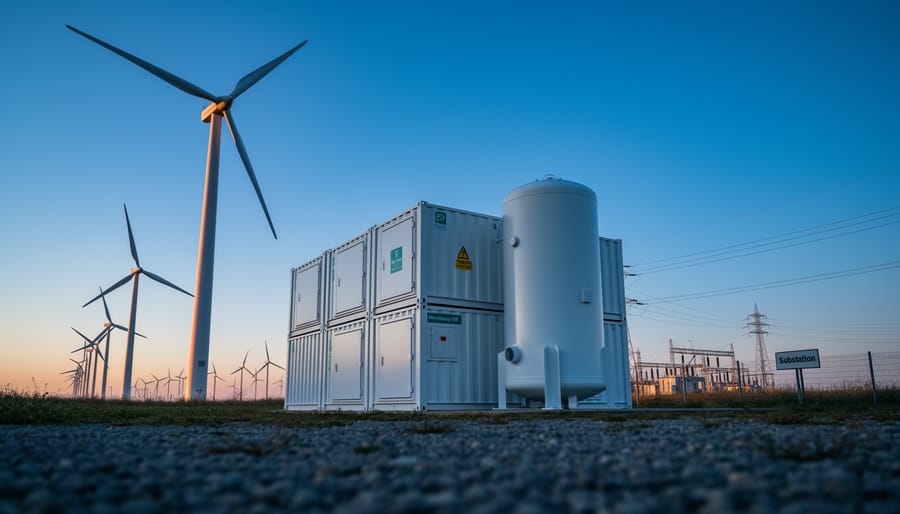
One more question often follows: what happens to the electricity when the wind drops? Turbines only generate while air is moving, so grids balance supply using other sources and, increasingly, energy storage that holds surplus power for calmer hours. It’s a good reminder that capturing kinetic energy is only the first step in a much bigger, increasingly circular system.
From a gust sweeping across a ridge to power flowing through the grid, the story of kinetic energy in a wind turbine is one of elegant, everyday physics. Moving air turns the blades, the shaft spins the generator, and electricity heads out to homes and businesses. What makes this moment so exciting is what comes next. When we understand the stresses that wind places on every component, we can design parts that last longer, repair them smartly, and recycle steel, copper, and even blades at the end of their lives. Clean energy and materials that stay in use are a future worth building together.